
Jewish Inventor Played Key Role in Creation of Drip Irrigation Commonly Used Today
While hand watering remains the most common way to ensure that a garden or crop gets adequate hydration, drip irrigation has continued to become more common practice, particularly with home gardeners, accounting for about one in every three ways that home enthusiasts make certain they get enough water to flowers, fruits and vegetables. While some form of drip irrigation has been employed for millennia, the preferred form of modern drip irrigation, with plastic emitters that target the roots of a plant, was initially developed in Israel in the late 1950s.
What Is Drip Irrigation and What Are the Benefits?
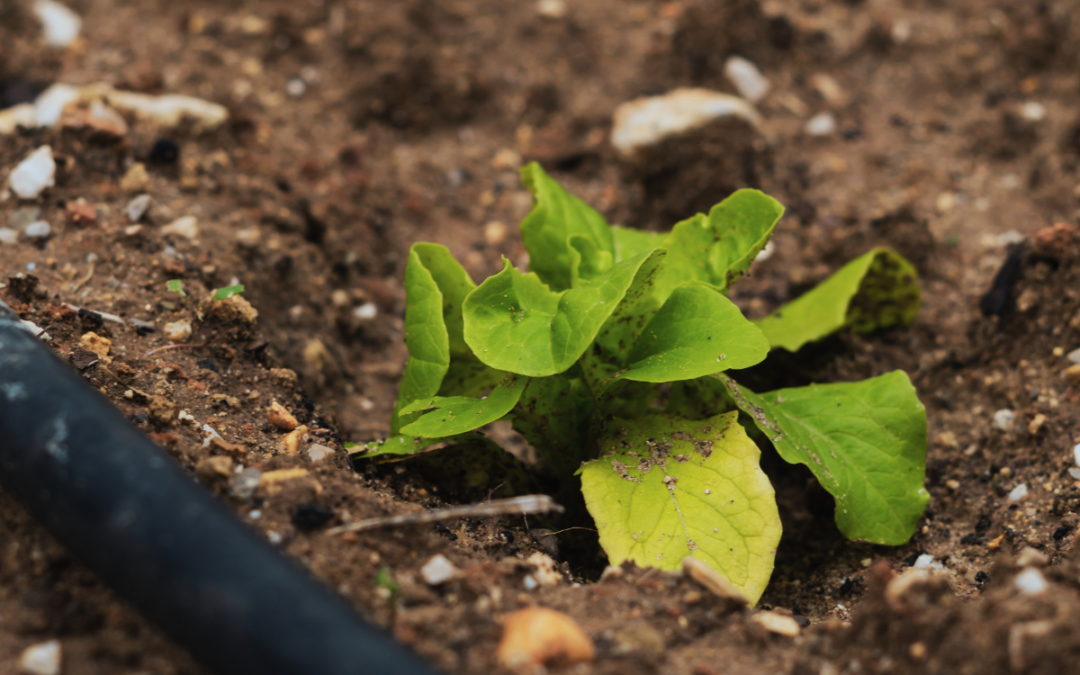
Drip irrigation is a method of watering that targets the flow of water directly to the roots of the plant, rather than spraying a stream or mist broadly over the top of plants. Drip irrigation has multiple benefits over a hose and nozzle or a sprinkler system:
- It dramatically reduces the amount of water needed to properly nourish a plant, as the water more readily reaches the roots of the plant, where it can be taken in and distributed throughout (common estimates are that drip irrigation can cut water usage by 50-70 percent)
- It minimizes the loss of water to evaporation
- It reduces the risk of water-borne pathogens, including certain types of molds or mildew, that can damage or even kill a plant
- It typically keeps weeds down, as most of the water goes to the plants, leaving little for the weeds
- It ensures that any fertilizers aren’t dissipated into the ground away from the plant, but go directly to the roots
- It requires less energy to drip than to sprinkle, saving money
A Brief History of Drip Irrigation
The first recorded instance of anything akin to drip irrigation was in China just before the beginning of the Common Era, where it was documented that Chinese farmers and gardeners filled unglazed pots with water and then buried them near their crops, so that the water would seep out of the pots and irrigate nearby plant roots.
In the 1860s, farmers and researchers in Afghanistan and Germany developed a clay pipe that ran underground, covering a larger area. Challenges included clogs and broken pipes, as well as the potential disintegration of the clay.
The 1920s saw the development of perforated pipes, typically of clay or wood. These pipes had a number of structural issues, including root infiltration, brittle material, decay from moisture and blockages from grit and silt.
Jewish Engineer Revolutionizes Drip Irrigation
In the late 1950s, Simcha Blass, a water engineer in Israel, changed drip irrigation forever by inventing a plastic drip emitter, which slowed down the flow of water with friction. Blass allegedly drew his inspiration from a farmer in Palestine, who showed him the big and healthy tree growing in his backyard—in an arid zone without any identifiable source of water. When Blass dug around the tree, he discovered a leaky coupling from a nearby water system that was causing water to get to the one tree (but not to any others). He was particularly intrigued by how little water provided hydration to the massive tree, theorizing that if the flow of water could be slowed down, the watering process would be more efficient.
Together with his son, Yeshayahu, Blass experimented with releasing water through longer passageways (rather than small holes), which reduced the flow of water by friction. Blass’s system took the water above ground to the plants, eliminating potential problems with clogging or blockages caused by dirt or grit. Scientists now agree that the most efficient means of irrigating plants is through above-ground drip emitters, which can be targeted to the plant’s root system.
Gutterman’s and Gutterman Warheit—Full-Service Funeral and Burial Assistance for More than Six Generations
At Gutterman’s and Gutterman Warheit, with funeral chapels located in both New York and Florida, we have provided comprehensive funeral and burial services to individuals and families in the Jewish community for more than 130 years. We understand the distinct practices within each Jewish tradition and can assist with every detail, whether it’s the structure of the memorial service or the selection of a casket, monument or marker, arrangement for sitting Shiva or the preparation of a Yahrzeit calendar. We will also work directly with the Chevra Kadisha to ensure compliance with Jewish law in the preparation of the body.
To learn how we can help, send us an email or call us at one of the numbers listed below.
Gutterman’s & Gutterman Warheit — Where Relationships Matter
Family Owned and Operated Since 1892
Rockville Centre: (516)764-9400 | Woodbury: (516)921-5757 | Brooklyn: (718)284-1500
Boca Raton, FL: (561)997-9900 | (800)992-9262